
By Sofia Arango, Latinos en Pizza
Four key steps to build community, trust, and sales.
In the first part of this series, we discovered a pattern that kept coming up throughout our interviews with pizza makers across Latin America and the United States: the content that performs best is rarely the most polished.
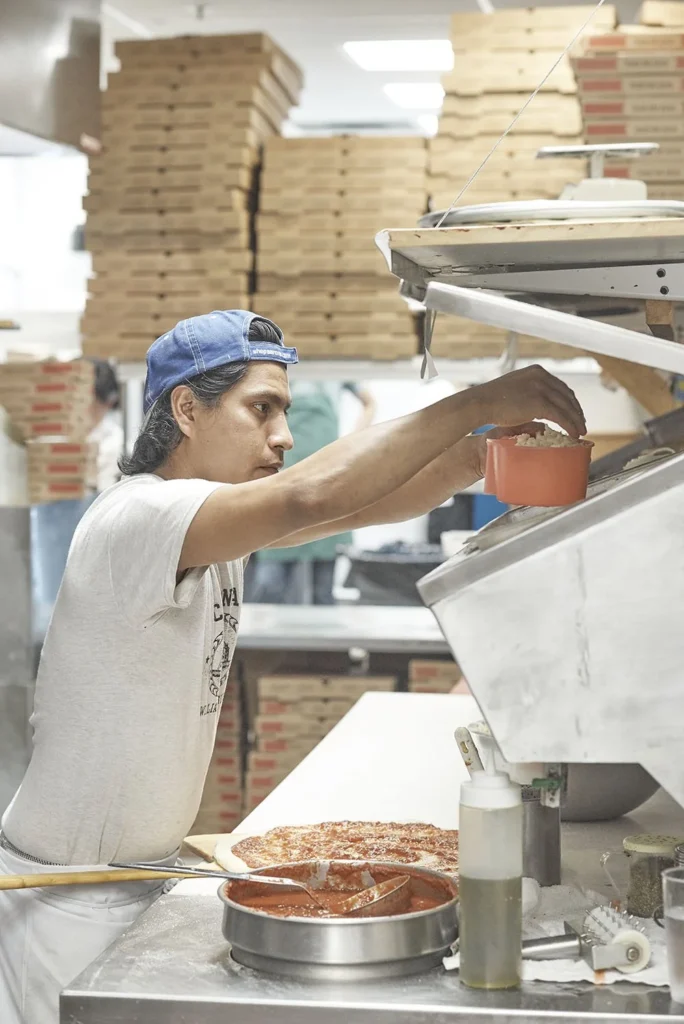
People want to see what happens behind the scenes of making a great pizza, often even more than the finished pizza itself.
But understanding what works is only the first step.
The next question is even more important:
How do you start creating content and, more importantly, stay consistent over time?
After several years creating food content, working with small businesses, and studying marketing strategies for restaurants, these are the four principles I believe are essential to getting started.
Step 1. Stop Chasing the Algorithm
One of the biggest mistakes businesses make is believing that social media growth depends on understanding the algorithm.
What’s more, posting more doesn’t always lead to better results. Sprout Social’s 2024 report concluded that content quality matters more than quantity, recommending that brands prioritize posts that genuinely connect with their audience instead of simply increasing posting frequency.
The reality is that algorithms change constantly, and trying to keep up with every update is usually a waste of time.
Instead of asking yourself, “What’s the best time to post?”, try answering a much more useful question:
What does my audience want to keep seeing?
The best way to find out is through experimentation.
Try different formats, analyze which ones generate the most engagement, and once you find an idea that works, create different versions of it.
In my own experience, I discovered that my audience enjoyed seeing my mistakes far more than perfectly produced pizza videos. In fact, one video showing a broken pizza surpassed 100,000 views in just one week.
Step 2. Use Trends as a Starting Point, Not a Template
Trends exist for a reason: they’ve already captured the attention of millions of people.
But copying them exactly rarely produces the same results.
The key is to use the structure of a trend to tell a different story.
For example, during a recent viral debate about a man who complained because his date ordered a “triple burger,” thousands of people criticized his attitude. A pizzeria could grab attention by opening a video with a deliberately controversial line:
“I actually think the triple burger guy was right…”
…only to immediately flip the expectation with something like:
“Because a first date deserves a pizza from [Your Pizzeria], not a burger.”
The goal isn’t to copy the trend. It’s to use the curiosity it creates to direct attention toward your brand in an unexpected way.
If you can’t bring a fresh perspective to a trend, you’re probably better off waiting for the next one.
Step 3. Put a Face Behind Your Pizzeria
People connect with people.
It’s no coincidence that putting a face behind your brand works. According to Edelman, 60% of consumers trust what a creator says about a brand more than what the brand says about itself, highlighting the value of authentic, personal communication.
Talking on camera may feel uncomfortable at first, but it’s still one of the most effective ways to build trust and give your business a personality.
That said, it can easily fall flat if you sound like you’re starring in a television commercial.
Instead, talk as if you were telling a story to a close friend. That natural tone feels far more authentic than a perfectly memorized script.
This doesn’t happen overnight. It takes time to become comfortable in front of the camera and make content creation part of your routine. But if you stay consistent, that discomfort eventually fades.
And when it does, something much more valuable starts to grow: a community that recognizes the people behind your brand.
Step 4. Provide Value Before You Try to Sell
Most people won’t follow your account because they want to buy a pizza that same day.
They follow because your content gives them something.
It might be knowledge. It might be entertainment. It might simply remind them how good a pizza looks when they’re hungry (and yes, that eventually leads to sales). Or it might simply make them feel connected to what happens behind the counter.
Before posting any video, ask yourself one question:
Why would someone spend thirty seconds watching this?
If you can answer that clearly, you’re probably building a stronger social media strategy.
Get Started Today: Five Ideas to Spark Your Creativity
Now that you know these four principles, here are five simple ideas to help you put them into practice:
- Tell people a story that happened at your pizzeria. It can be real or fictional, as long as it’s entertaining. While telling the story, naturally work in a product you’d like to promote.
- Reinterpret a trend. Instead of doing exactly what everyone else is doing, think about the opposite reaction or an unexpected punchline.
- Film a “day in the life” of a pizza maker. From the moment you arrive at the pizzeria until closing time. Use short clips between three and six seconds long, and add a hook that sparks curiosity, such as: “A day in the life of a pizza maker who made 500 pizzas for a festival” or “A day in the life of a pizza maker who only burnt three pizzas today.”
- Answer a frequently asked customer question, but make it fun. A little sarcasm can go a long way. For example: “When a customer asks you to leave a Neapolitan pizza in the oven for a couple more minutes…” followed by a timer and a completely burnt pizza.
- Show something people don’t normally get to see. It could be dough after 48 hours of fermentation, lighting the oven first thing in the morning, a pizza that didn’t turn out as planned, or your team preparing for service.
And finally…
The best content strategies don’t come from templates. They come from consistent practice.
I hope this guide gives you a starting point to experiment, find your own voice, and build a community around your pizzeria.
If you try any of these ideas, tag @latinosenpizza and @afinobygrande. We’d love to see how you adapt them to your business and share some of our favorites with the community.